Advanced Upper GI Surgery

Minimally Invasive & Open Approaches

As a specialist Upper GI surgeon, I perform a range of advanced operations for both cancer and complex benign conditions of the oesophagus and stomach.

These are often major procedures—but with modern keyhole (laparoscopic) and hybrid techniques, we can offer safer surgery, faster recovery, and better outcomes than ever before.

All operations are tailored to each patient, with planning through a multidisciplinary team (MDT) involving oncologists, radiologists, dietitians, anaesthetists, and more.  

Gastrectomy for Gastric Cancer

Total & Subtotal – Laparoscopic and Open

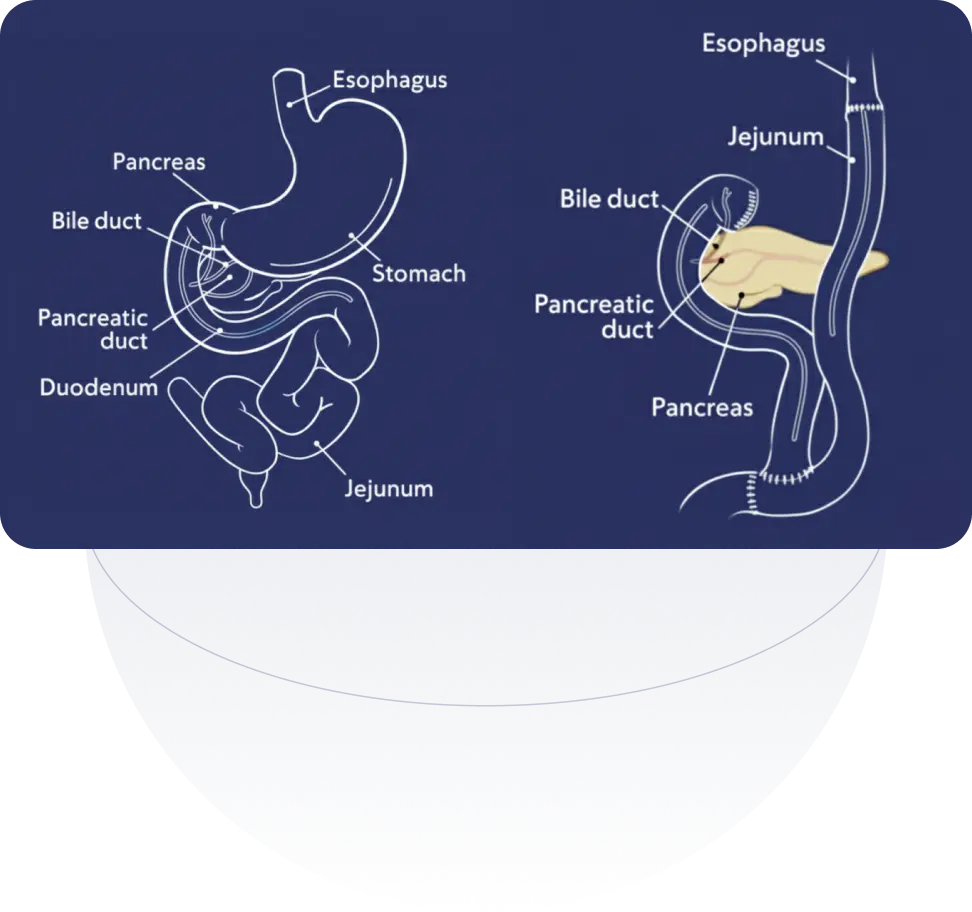
Gastrectomy means removing part or all of the stomach. It’s most commonly performed to treat gastric (stomach) cancer, and the approach depends on tumour size, location, and stage.

We offer:

Total gastrectomy

Removal of the entire stomach

Subtotal/distal gastrectomy

Removal of the lower part of the stomach

Where appropriate, these are performed using minimally invasive (laparoscopic) techniques, sometimes combined with a small open incision (hybrid approach).

Advanced cancers may still require open surgery, particularly if adjacent organs are involved

We perform:

Oncologically sound resections with curative intent

Lymph node dissection according to international standards

Reconstruction with Roux-en-Y or modified approaches for excellent long-term gastrointestinal function - a return to normal or near-normal eating and drinking

Gastrectomy for GISTs, NETs & Other Rare Tumours

Not all stomach tumours are cancers. Some—like GISTs (gastrointestinal stromal tumours) or neuroendocrine tumours (NETs)—can often be removed with smaller, focused or more tailored resections.

Surgical options include:

Wedge resection

For larger or deep tumours

Laparoscopic resections

Ideal for many GISTs, depending on location

We work closely with pathologists and medical oncologists to guide further treatment if needed.

Organ-preserving where possible

Minimally invasive when safe

Curative intent where appropriate

Oesophagectomy

for Oesophageal Cancer & Advanced Benign Disease

Oesophagectomy is the surgical removal of part or all of the oesophagus, usually with reconstruction using the stomach or bowel.


It’s most often performed for oesophageal cancer, which is a relatively common and serious condition. The two main types are:

Adenocarcinoma, often linked to reflux and Barrett’s oesophagus

Squamous cell carcinoma (SCC), more common in smokers or those with alcohol-related disease

Treatment is usually multimodal, meaning it involves a combination of:

Minimally invasive when safe

Curative intent where appropriate

In many cases, patients receive chemo- or chemoradiotherapy first, to shrink the tumour before surgery (neoadjuvant therapy). Surgery is then used to remove any remaining cancer and surrounding lymph nodes.

We also perform oesophagectomy for selected benign but advanced conditions such as:

End-stage achalasia

Severe corrosive injury

Complex or failed previous surgeries

We offer:

Minimally Invasive Oesophagectomy (MIO)

This is a state-of-the-art approach that uses keyhole techniques to access both the abdomen (laparoscopy) and chest (thoracoscopy), performed as either a 2-stage or 3-stageprocedure depending on tumour location and patient factors.

At Auckland City Hospital, we have pioneered the introduction of MIO in New Zealand, developing one of the country’s highest-volume programs.

Most of our cases are performed using a two-surgeon model, with both consultants operating together.

This approach:

Enhances intraoperative decision-making

Improves technical precision

Enables shared responsibility for post-operative care and complication management

This model ensures continuity and safety throughout the patient journey—from complex surgery through to recovery and long-term follow-up.

Hybrid oesophagectomy

Combining keyhole and open techniques

Open oesophagectomy

still required in some advanced or complex cases

High-volume centre experience

Focus on both cancer control and post-op quality of life

MDT-led care with oncology, anaesthesia and specialist nursing support

Working with a Specialist Team

All patients undergoing major Upper GI surgery are discussed in a multidisciplinary team (MDT) meeting and receive ongoing care from:

Upper GI anaesthetists

Specialist dietitians

Nurse Practitioner

Medical and Radiation Oncologists

Specialist nurses and physiotherapists

Patient Journey

At EVEN8, surgery is never just a one-off event — it’s a carefully supported journey. From the first appointment through to long-term recovery, you’ll be guided by a team that puts your safety and wellbeing first.

1

Initial Consultation

Your journey begins with a thorough discussion about your health, history, and goals. We’ll review scans, tests, and any previous treatments to understand your unique situation.

2

Diagnostic Workup

If further tests are needed, we arrange these quickly — from imaging and blood work to endoscopy — so we have a clear picture before moving forward.

3

Surgical Planning

Every case is reviewed in a multidisciplinary team (MDT) meeting, where surgeons, oncologists, dietitians, anaesthetists, and other specialists collaborate to create the safest and most effective plan for you.

4

Surgery

Depending on your condition, we use minimally invasive (keyhole), hybrid, or open approaches. In many cases, two consultant surgeons operate together for added safety and precision.

5

Recovery

You’ll be closely monitored in hospital with access to specialist nursing, dietitian support, and physiotherapy. Most patients are up and moving within days.

6

Long-Term Follow-Up

Care doesn’t stop after discharge. We provide ongoing follow-up, nutritional support, and coordination with your GP and other specialists to help you return to normal life with confidence.